A sermon preached by the Reverend Canon Dr. David Anderson, at St. Jude’s Church, Oakville on Sunday, November 8, 2026, The Twenty-fourth Sunday after Pentecost, Remembrance Sunday. Title: ‘Remembering the Faithful and Living Vigilantly.’ Texts: Joshua 24:1–3a, 14–25; Psalm 116:1–8; 1 Thessalonians 4:13–18; Matthew 25:1–13.
I speak to you in the name of the Father, and of the Son, and of the Holy Spirit. Amen.
Today, two kinds of remembrance meet.
As a nation and as a people, we gather to remember those who served and sacrificed in times of war. We remember names engraved in stone, photographs fading in albums, stories told around family tables, and lives given in hope that others might live in peace.
At the same time, the Church remembers something even deeper: the faithfulness of God across generations, and the promise that in Christ those who have died are not lost to us forever.
The scripture readings appointed for today speak powerfully to both forms of remembrance. In Joshua, the people of Israel are gathered at Shechem. Joshua is nearing the end of his life. He knows that memories fade, commitments weaken, and each generation faces the temptation to forget. So he retells the story of God’s faithfulness. “I took your father Abraham,” God says. “I led you. I delivered you.”
Then Joshua challenges the people: “Choose this day whom you will serve.” Notice what happens. Before there is commitment, there is remembrance. Before Joshua asks for faithfulness, he reminds the people of God’s faithfulness.
The same pattern appears in today’s psalm, but in a deeply personal way. The psalmist is not speaking about a nation or a people. He is speaking about his own life. Looking back, he remembers moments of fear and distress. He remembers times when the future seemed uncertain and when death itself felt near. Yet what remains strongest in his memory is not the danger he faced, but the God who was with him through it. “I love the Lord, because he has heard the voice of my supplication.”
On Remembrance Sunday, many of us can recognize something of ourselves in those words. We carry memories of loved ones lost. Some carry memories of military service. Others remember times of illness, grief, loneliness, or hardship. We remember moments when life was fragile and uncertain.
The psalm does not ask us to pretend those experiences were easy. Instead, it invites us to look back and ask: Where was God in the midst of it all? And often, with the passing of years, we discover that God was present in ways we did not fully understand at the time. Through the kindness of others, through unexpected strength, through the comfort of prayer, through a hope that somehow endured, the Lord remained faithful. The psalmist can therefore say, “You have rescued my soul from death, my eyes from tears, and my feet from stumbling.” That is not the voice of someone who has never suffered. It is the voice of someone who has suffered and discovered that God does not abandon his people.
Memory, in the life of faith, is not simply about the past. It is about recognizing God’s faithfulness in the story of our lives and finding courage to trust him with whatever lies ahead. That is why Remembrance Sunday matters. We do not gather merely to look backward with nostalgia. We remember so that we might become the kind of people who pursue peace, justice, courage, and self-sacrificial love in our own day. We remember because forgetting is dangerous. When a society forgets the cost of war, it can become careless about conflict. When the Church forgets God’s faithfulness, it can lose courage in difficult times. When individuals forget the sacrifices that brought them to this moment, gratitude begins to disappear.
Christian remembrance is never simply an act of looking back. It is an act of receiving a gift and carrying it forward. For Christians, remembrance is not merely an exercise of memory. It lies at the very heart of our worship. Whenever we gather at the at the Eucharist, we obey Christ’s command: “Do this in remembrance of me.” In the Eucharist, remembrance is more than looking back to a past event. We recall before God the saving acts of Christ: his life, death, resurrection, ascension, and his promise to come again. We give thanks for all that God has done for the redemption of the world, and we offer ourselves anew in response to his grace.
This is one reason why we don’t set the Eucharist aside for Remembrance Sunday. Yes, we come carrying many memories: the sacrifice of those who served in war, the witness of the saints who have gone before us, and the love of family members and friends whom we no longer see. We bring them all to this holy table. Here we discover that Christian remembrance is always accompanied by hope. For in this sacrament we are united with Christ and joined to his whole Church, on earth and in heaven. Around this table we are reminded that those who have died in the faith are not lost to God, but remain held in his eternal love.
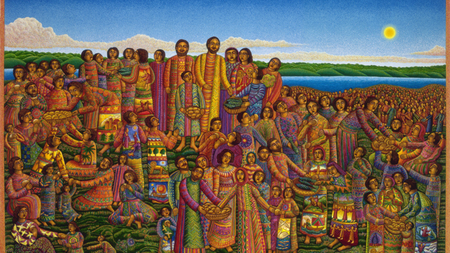
And every Eucharist looks not only backward but forward. As we proclaim the mystery of faith, we await the day when the risen Lord will come again, when the heavenly banquet will be spread for all God’s people, and when every tear will be wiped away. The Church remembers, gives thanks, and waits with hopeful expectation for the coming of the Bridegroom.
Yet today many of us carry another kind of remembrance. We remember loved ones. Remembrance Sunday often awakens personal grief. The silence of the two-minute pause can bring to mind parents, spouses, friends, veterans, parishioners, and saints whose voices are no longer heard among us. On Remembrance Day I remember my grandfathers, two men I never met, who served. This past Monday, on All Souls Day, which happens to be the anniversary of my dear mother’s birthday, our family remembered my dear mother no longer with us. It is in these sorts of personal memories that Paul’s words to the Thessalonians speak so tenderly. The early Christians were worried about believers who had died before Christ’s return. Had they somehow missed out? Had death won?
Paul does not tell them not to grieve. Notice that carefully. He says we do not grieve “as others do who have no hope.” Christian faith never asks us to pretend that death does not hurt. Jesus himself wept at the tomb of Lazarus. The gospel does not remove grief. It transforms it. We grieve, but we grieve with hope. We mourn, but we mourn in confidence. We weep, but not in despair. Because Christ has entered death and emerged victorious. Because the risen Lord still holds his people in his hands. Because those who have died in Christ remain alive in him.
On this day when we honour the war dead and remember all our beloved dead, Paul’s words remind us that remembrance is not the final word. Resurrection is. The names we speak today are not merely names from history. They are people known perfectly and eternally by God. The final trumpet, Paul tells us, belongs not to war but to Christ. The final gathering will not be on a battlefield but in God’s kingdom. The final victory will not be won by armies but by the Lamb who was slain and lives forever. And that promise brings us to the Gospel.
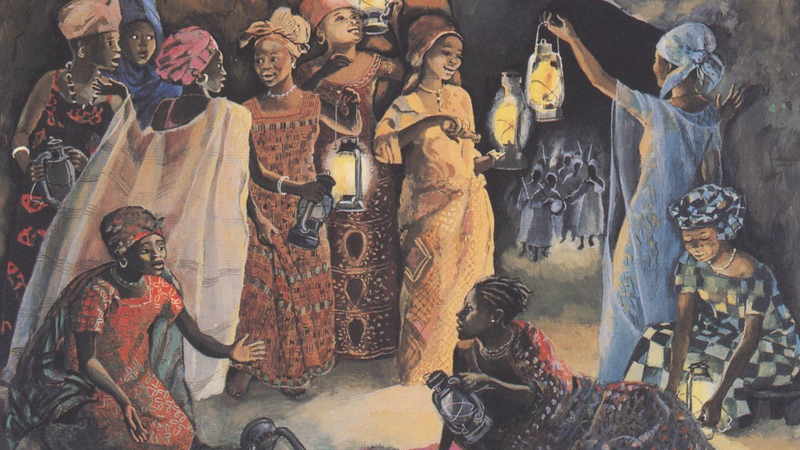
Jesus tells the parable of ten bridesmaids waiting for the bridegroom. Five are wise and five are foolish. The difference between them seems almost surprisingly ordinary. All of them fall asleep. All of them wait. All of them expect the bridegroom. The difference is that only five have prepared. They are ready when the moment arrives.
On Remembrance Sunday, that parable may be especially important. Those whom we honour today often lived lives marked by readiness. Some answered a call they never expected. Some left homes and families. Some acted with courage in moments that demanded sacrifice. They remind us that character is formed long before the moment of testing arrives.
The wise bridesmaids are not heroic because of what they do at midnight. They are wise because of how they have lived beforehand. The Christian life is much the same. Faithfulness is not usually forged in dramatic moments. It is formed through daily prayer. Daily repentance. Daily acts of kindness. Daily trust in God. Daily choices to love our neighbours. Daily participation in the life of Christ. And one day the bridegroom comes. One day Christ returns. One day history reaches its fulfilment. The question Jesus asks is not whether we can predict that day. The question is whether we are living in a way that prepares us for it.
Remembrance teaches us about the past. Hope teaches us about the future. Faithfulness helps us live in the present.
Today we remember those who served and sacrificed. We remember loved ones who have gone before us. We remember the mighty acts of God. And in this Eucharist, we remember Christ, who gave himself for the life of the world and who gathers us into one communion that stretches across time and eternity.
And remembering all these things, we hear God’s call afresh: Choose whom you will serve. Trust the God who has been faithful in every season. Do not grieve without hope. Keep your lamps burning. Be ready.
For the God who was faithful to Abraham, faithful to Israel, faithful to the psalmist in his distress, faithful to the apostles, faithful to the saints, and faithful to those whom we honour today, will also be faithful to us.
And so, as we stand in the company of all who have gone before us, let us give thanks, take courage, and continue the journey until that day when all God’s people are gathered together at the heavenly banquet, where the Prince of Peace reigns, and where every remembrance is gathered into everlasting joy.
In the name of the Father, and of the Son, and of the Holy Spirit. Amen. +