
A sermon preached by the Reverend Canon Dr. David Anderson, at St. Jude’s Church, Oakville on Wednesday, March 4, Lenten Feria.
Title: ‘The Cup.’ Text: Matthew 20:17-28.
I speak to you in the + name of Father, Son and Holy Spirit. Amen.
By the time we have gathered at 10:30, the day is already in motion. Emails have been answered, appointments made, news headlines scanned, and the small frictions of the morning have had their say. And into this already‑moving day, the Gospel reading for today places us on the road with Jesus.
Matthew tells us that Jesus is going up to Jerusalem. It is not simply a change of location; it is a movement toward the heart of his mission. Every step brings him closer to the cross, and he knows it. He knows what awaits him—betrayal, condemnation, mockery, death. He names it plainly. There is no attempt to soften the truth, no attempt to shield his friends from the cost of love.
And that honesty is striking. Jesus does not pretend that discipleship is a path of ease or admiration. He speaks truthfully because he loves them. He wants them to be prepared, not blindsided. He wants them to walk with him with open eyes.
But the disciples hear something different. Or perhaps they hear what they hope is true. Because immediately—almost abruptly—the mother of James and John steps forward with a request. “Declare that these two sons of mine will sit, one at your right hand and one at your left, in your kingdom.”
It is such a human moment. A mother’s desire for her children to flourish. A hope that following Jesus will lead to honour, recognition, security. And who among us doesn’t understand that? We want the people we love to be safe. We want our faith to matter. We want our sacrifices to count for something.
But the request reveals a misunderstanding—not of Jesus’ love, but of his way.
Jesus has just spoken of surrender, and they imagine status. He has spoken of suffering, and they picture thrones. He has spoken of giving himself away, and they are thinking of what they might gain.
And Jesus, with that patient tenderness that marks so much of his ministry, does not shame them. He asks a question: “Are you able to drink the cup that I am about to drink?”
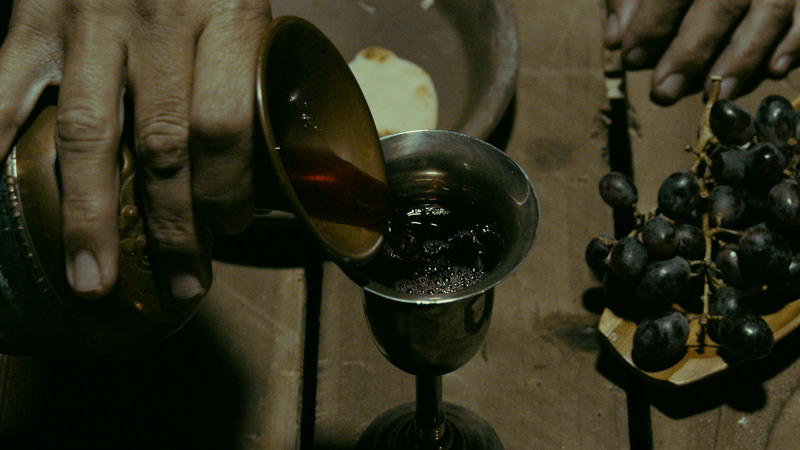
The cup. Scripture uses this image again and again. Sometimes it means suffering. Sometimes it means blessing. Often it means participation—sharing in the life and mission of God. Jesus is asking them, “Are you able to share my path? Not the glory you imagine, but the self‑giving love that will lead me to the cross?”
And they answer quickly—too quickly—“We are able.”
Their answer holds both courage and naiveté. A sincere desire to follow Jesus, and a deep unawareness of what that will require. And again, we recognize ourselves. How often do we say yes to God before we understand what the yes will cost? How often do we imagine discipleship as something noble, admirable, even comfortable—only to discover that it asks us to let go of things we cling to, to forgive when we’d rather hold on, to serve when we’d rather be noticed?
The other disciples become angry when they hear the request. But their anger reveals the same ambition. They are upset not because the request is wrong, but because they didn’t think to ask first. And Jesus gathers them—this little community of competing hopes and fragile egos—and he teaches them again what greatness looks like in the Kingdom.
“You know that the rulers of the Gentiles lord it over them,” he says. “It shall not be so among you.”
In those words, Jesus draws a line between the world’s imagination of power and God’s imagination of power. In the world, greatness is measured by how high you climb, how many people serve you, how much influence you hold. But in the Kingdom, greatness is measured by how deeply you serve, how gently you love, how willingly you bend toward the vulnerable.
“Whoever wishes to be great among you must be your servant,” Jesus says. “Whoever wishes to be first must be your slave.”
And then he grounds it all in himself: “For the Son of Man came not to be served but to serve, and to give his life as a ransom for many.”
This is not a metaphor. It is the shape of his life. The shape of his love. The shape of the cross.
And it is the shape he invites us into.
Not because suffering is good in itself. Not because humility is a virtue to be admired from afar. But because service—real, embodied, costly service—is the way God heals the world. It is the way God draws near to the broken. It is the way God reveals the depth of divine love.
And so, Jesus asks us, as he asked James and John: “Are you able to drink the cup?”
Not the cup of punishment. The cup of participation. The cup of solidarity. The cup of love poured out.
And perhaps, like the disciples, we answer too quickly. Or perhaps we hesitate, knowing our limits. But the good news is this: Jesus does not ask us to drink the cup alone. He drinks it first. He drinks it with us. He drinks it for us.
And every time we gather at this Eucharistic table, he places that cup in our hands again. Not as a test, but as a gift. Not as a burden, but as a promise. Not as a demand, but as an invitation into his life.
At 10:30 on a Wednesday morning, the invitation feels grounded and real. We come not from the stillness of dawn but from the movement of our day. We come with the concerns of the morning still echoing in us. And in the midst of that movement, Jesus offers us a different way—a way that is not driven by competition or achievement, but by compassion and service.
And perhaps that is the quiet greatness Jesus speaks of. Not the greatness of accomplishment, but the greatness of faithfulness. The greatness of showing up. The greatness of choosing compassion in the small, unseen corners of life. The greatness of bending toward one another in love.
In our parish, we see this greatness all the time. In the person who arrives early to prepare the space. In the one who checks in on a neighbour. In the quiet prayers offered for someone who is struggling. In the volunteers who serve without seeking attention. If you were at our Annual Vestry meeting this past Sunday and/or if you read our Annual Report, it was wonderful to celebrate all of the ways so many people in this faith community faithfully serve. We see this greatness Jesus speaks of in the gentle, steady acts of care that weave our community together.
This is the greatness Jesus blesses. This is the greatness that reflects his heart.
And so today, as we come to the table, we come as people who are learning—slowly, imperfectly, beautifully—to drink the cup he offers. We come as people who want to follow him, even when we don’t fully understand the path. We come as people who trust that his way of love, though costly, is the way that leads to life.
May we drink the cup with humility. May we drink it with courage. May we drink it with gratitude. And may the One who came not to be served but to serve shape us into a community where his way is lived, shared, and made visible. Amen. +

