
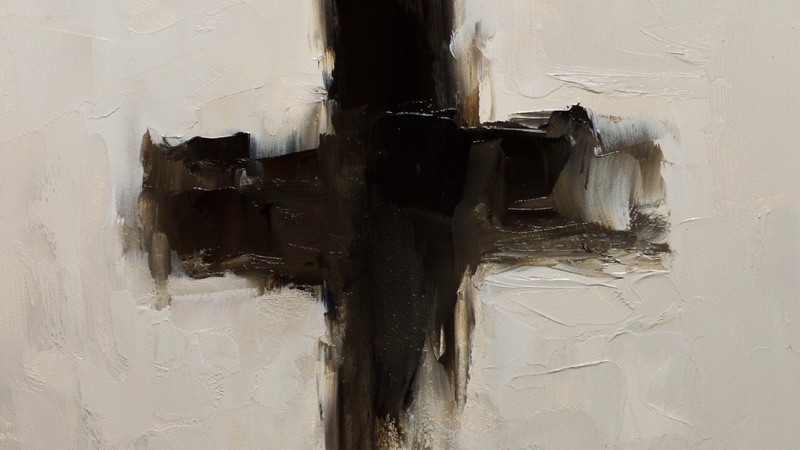
A sermon preached by the Reverend Canon Dr. David Anderson, at St. Jude’s Church, Oakville on Wednesday, February 18, 2026, Ash Wednesday. Title: ‘Remember You Are Dust—And Remember You Are Loved.’ Text: Matthew 6. 1–6, 16–21.
Beloved in Christ, tonight we begin a journey. Not a journey of miles, but a journey of the heart. Not a journey toward achievement, but a journey toward truth. Not a journey of self‑improvement, but a journey of returning—returning to the God who made us, who knows us, who loves us, and who calls us home.
Ash Wednesday is one of the most honest days of the Christian year. It is the day when the church stops pretending. It is the day when we set aside our polished surfaces and our carefully managed images and we stand before God as we truly are—finite, fragile, beloved dust.
And the remarkable thing is that God meets us here. Not when we are impressive, not when we are successful, not when we are strong, but when we are honest.
In a few moments, we will come forward to receive ashes on our foreheads. It is a strange thing to do. It is not something we do anywhere else in our lives. No one leaves the house in the morning thinking, “I hope someone smudges soot on my face today.” And yet, year after year, Christians across the world gather to hear the same words spoken over them: “Remember you are dust, and to dust you shall return.”
These words are not meant to shame us. They are meant to locate us. They remind us that we are creatures, not gods. They remind us that our lives are precious precisely because they are finite. They remind us that we are held by a God who knows our frailty and loves us in it. The ashes we receive tonight are not a symbol of despair. They are a symbol of truth. And truth, in the Christian life, is always the beginning of grace.
Lent is not a season for pretending. It is not a season for spiritual performance. It is not a season for proving ourselves to God. Lent is a season for telling the truth. The truth about our limits. The truth about our longings. The truth about our wounds. The truth about our habits that harm us and harm others. The truth about the ways we avoid God, even when we say we want God. The truth about the ways we cling to control, even when it exhausts us. The truth about the ways we numb ourselves, distract ourselves, or hide from ourselves.
Lent is the season when the church gently invites us to stop running. To stop running from God. To stop running from ourselves. To stop running from the parts of our lives we would rather not face.Not because God wants to scold us, but because God wants to heal us.
In the Gospel reading appointed for today, Jesus speaks about giving, praying, and fasting. And he repeats a phrase again and again: “Your Father who sees in secret.” Not “your Father who sees when you get everything right.” Not “your Father who sees when you impress others.” Not “your Father who sees when you are strong.” Your Father who sees in secret. The God who sees the parts of you no one else sees. The God who sees the fears you carry quietly. The God who sees the grief you don’t talk about. The God who sees the habits you wish you could break. The God who sees the tenderness you hide. The God who sees the hopes you barely admit to yourself. The God who sees the beauty in you that you have forgotten.
Lent is not about performing for God. Lent is about letting ourselves be seen by God. And being seen—truly seen—is the beginning of transformation.
Ash Wednesday holds together two truths that we often try to keep separate. We are dust. We are beloved. Both are true. Both are necessary. Both are gifts.
When we forget we are dust, we become proud, frantic, self‑reliant, or overwhelmed by the illusion that everything depends on us. When we forget we are beloved, we become ashamed, anxious, self‑critical, or convinced that we must earn God’s approval. Ash Wednesday brings these truths back together. We are dust—finite, fragile, temporary. We are beloved—cherished, held, forgiven, desired by God. The ashes on our foreheads are shaped like a cross. Dust and love, mortality and mercy, held together in one mark.
Lent is not a self‑help project. It is not a spiritual boot camp. It is not a season for punishing ourselves. Lent is a season for returning. The Greek word for repentance—metanoia—literally means “to turn” or “to return.” To return to God. To return to truth. To return to the person God created us to be.
Lent is a season for clearing away the clutter that keeps us from hearing God’s voice. A season for loosening our grip on the things that do not give life. A season for making space for grace.
Some of us will take on practices. Some of us will let go of practices. Some of us will simply try to breathe more deeply and trust more fully. Whatever we do, the point is not the practice itself. The point is the turning.
As I said this past Sunday, Lent is lived not on mountaintops but in the ordinary. In the kitchen. In the car. In the office. In the quiet moments before bed. In the conversations we wish had gone differently. In the small choices that shape our days.
Lent is not about grand gestures. It is about small, faithful steps. Choosing honesty over hiding. Choosing compassion over judgment. Choosing silence over noise. Choosing prayer over distraction. Choosing generosity over fear. Choosing presence over busyness. These small choices, repeated over time, reshape us. They soften our hearts. They open our hands. They make room for God.
Lent is often described as a journey into the wilderness. And wilderness is not a comfortable place. It is a place where we cannot rely on our usual supports. A place where we face ourselves. A place where we discover what we truly hunger for.
But wilderness is also the place where God speaks. It is the place where Israel learned to trust God. It is the place where prophets heard God’s call. It is the place where Jesus prayed, fasted, and faced temptation. It is the place where angels ministered to him. The wilderness is not a punishment. It is a place of encounter. And the promise of Lent is that we do not walk into the wilderness alone. Christ walks with us. Christ goes before us. Christ meets us in the places we least expect.
Ash Wednesday points us toward the cross—not as a threat, but as a promise. The cross is the place where God takes our dust and our belovedness and holds them together. The cross is the place where God meets us in our brokenness and transforms it. The cross is the place where God shows us that nothing—not sin, not shame, not fear, not even death—can separate us from love. Lent leads us to the cross not to condemn us, but to free us. To free us from the lies we tell ourselves. To free us from the burdens we carry alone. To free us from the patterns that keep us stuck. To free us from the fear that we are not enough. To free us for joy, for compassion, for courage, for resurrection.
Tonight, as you receive the ashes, hear the invitation beneath the words.
- “Remember you are dust”—remember your humanity, your limits, your need.
- “Remember you are dust”—remember that you do not have to be perfect.
- “Remember you are dust”—remember that you are not God, and that is good news.
- “Remember you are dust”—remember that your life is precious because it is finite.
- “Remember you are dust”—remember that God meets you in your frailty.
And remember, too, the truth the ashes cannot say aloud but the cross proclaims:
- Remember you are loved.
- Remember you are forgiven.
- Remember you belong to God.
- Remember you are being made new.
As we begin this Lenten journey, may we walk with honesty. May we walk with courage. May we walk with tenderness toward ourselves and others. May we walk with openness to the God who sees in secret. May we walk with trust in the One who leads us through the wilderness. May we walk with hope in the promise of resurrection.
For we are dust—and beloved. We are dust—and held. We are dust—and destined for life. Amen. +

